

Fort Worth’s skyline rises beyond the Trinity River, a first look at the city you could soon call home.
If you’re moving to DFW, you may already have a few homes saved online. Getting to know the areas around them is just as helpful. What would your drive to work look like? Would you be close to friends, favorite activities, and the places you’ll visit every week?
In this DFW relocation guide, I’ll help you explore Fort Worth and nearby communities, from established neighborhoods to new construction. We’ll look at housing, outdoor recreation, and everyday conveniences so you can start narrowing down where you’d feel at home.
Table of Contents:
- Start with the part of DFW that fits your week
- Compare Fort Worth and nearby suburbs
- Check airport access and everyday destinations
- Research schools using the exact address
- Build a budget around the full ownership cost
- Compare new construction with existing homes
- Make your house-hunting trip count
- Plan your move with Tracey Serrell
Start with the part of DFW that fits your week
For anyone relocating to DFW Metroplex communities, the first question is where you’ll need to be regularly.
Will you work in downtown Fort Worth, the Alliance area, near DFW International Airport, or across the Metroplex in Dallas? Those destinations can lead to very different neighborhood shortlists.
If you’re moving to Fort Worth, also distinguish central neighborhoods from North Fort Worth. Heritage and Villages of Woodland Springs are within Fort Worth, even though their residential settings may feel suburban. Compare the actual address and route rather than relying on a city name or ZIP code.
Pro Tip: Test your likely commute at your usual travel times. Check TxDOT’s DriveTexas map for construction and closures before your scouting trip.
Compare Fort Worth and nearby suburbs
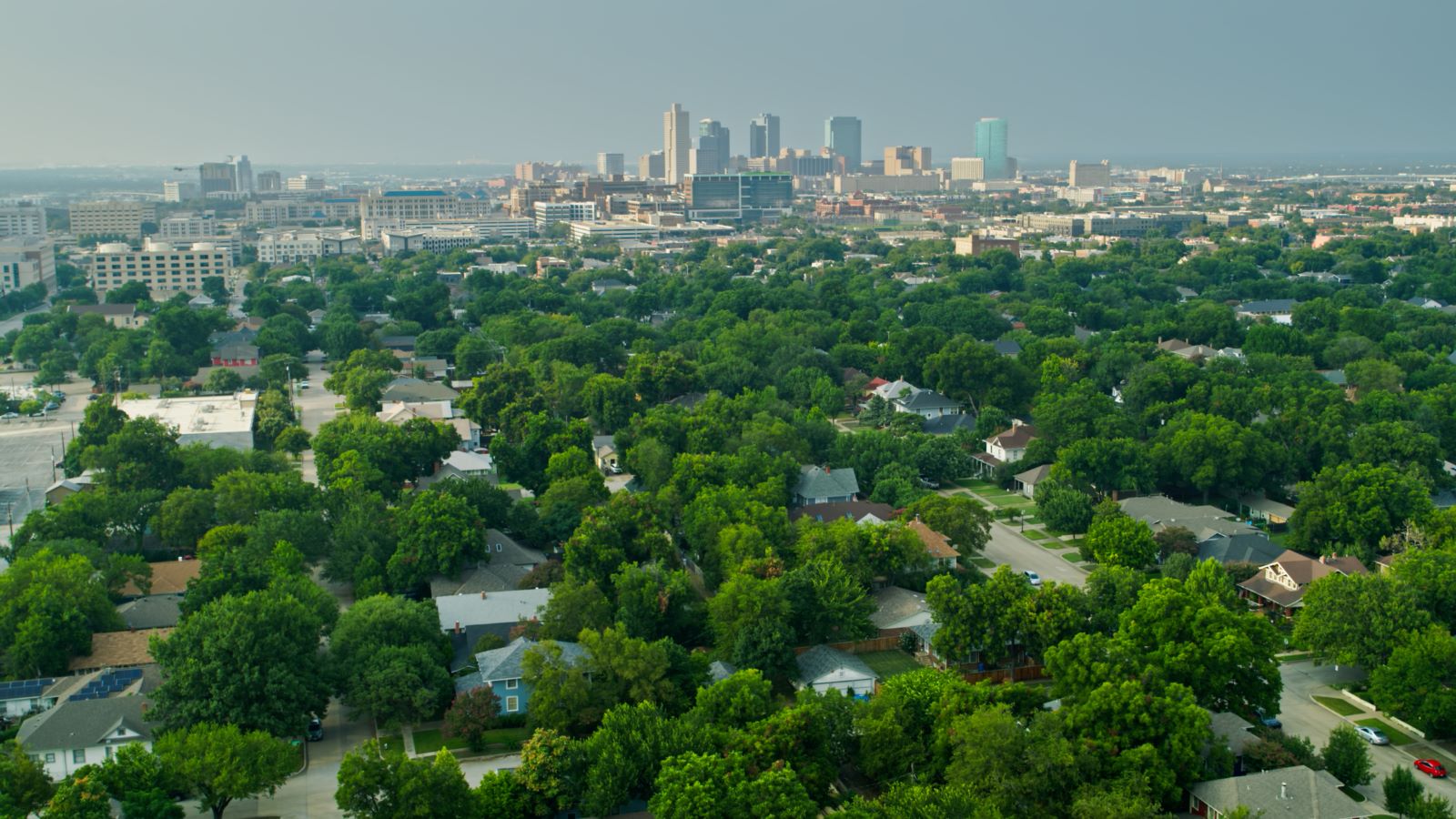
Fort Worth’s neighborhoods extend beyond the downtown skyline, giving relocating buyers a closer look at where everyday life takes shape.
The Fort Worth suburbs offer different combinations of housing, amenities, and location. Here are useful starting points for your search:
| Area | What to explore | What to check |
|---|---|---|
| North Fort Worth | Heritage, Villages of Woodland Springs, and shopping around Alliance Town Center | Your route to work and each neighborhood’s fees |
| Keller | Established neighborhoods, Old Town Keller, and Bear Creek Park | Home condition, lot size, and access to daily errands |
| Southlake | Southlake Town Square and neighborhoods with larger homes | Total ownership costs and the specific school assignment |
| Trophy Club | Golf-oriented neighborhoods and recreation at Trophy Club Park | Club membership costs and highway access |
| Haslet and Justin | Newer communities and opportunities to compare larger lots | Construction nearby, local roads, and municipal boundaries |
| Northlake and Argyle | Planned communities alongside areas with a more rural setting | District boundaries, special district taxes, and amenities |
| Flower Mound | Established neighborhoods, newer development, and Grapevine Lake recreation | The route from your particular neighborhood to work |
| Aledo | A location west of Fort Worth with a separate town center | Travel time to your workplace and nearby services |
| Eagle Mountain Lake area | Homes near boating, hiking, and waterfront recreation | Actual lake access, dock permissions, and property maintenance |
These are starting points, and neighborhoods within each area can differ considerably. I can help you compare the details that matter to your household. If you’re downsizing, we can also compare 55+ communities by maintenance responsibilities, amenities, and restrictions so a smaller home supports the lifestyle you actually want.
Pro Tip: Watch my Haslet vs. Justin comparison on The DFW Life, then note which neighborhood features you want to see in person.
Check airport access and everyday destinations
Major roads can help you orient your search: I-35W links North Fort Worth with downtown, while SH 114 serves the Southlake and Trophy Club corridor. For Aledo, I-20 is an important regional route. Include tolls and alternate routes when comparing your commute.
Airport proximity matters if you travel often, but map distance only tells part of the story. Compare the drive to your usual terminal, parking arrangements, and traffic at your typical departure time.
For some locations, rail is another option. Trinity Metro’s TEXRail connects downtown Fort Worth with DFW Airport’s Terminal B, with stations in North Richland Hills and Grapevine. Consider how you would reach the station and transfer to your flight.
Also map your grocery store, medical appointments, gym, and regular activities. A convenient airport trip is helpful, but you’ll make those everyday trips much more often.
Pro Tip: During your visit, run a few ordinary errands from a favorite neighborhood. That small test can reveal more than another model-home tour.
Research schools using the exact address
School district boundaries do not necessarily match city limits. A Fort Worth mailing address, for example, does not automatically place a home in Fort Worth ISD. Individual campus attendance zones are another layer to verify.
Start with the districts serving your shortlisted addresses, then look at the programs and services relevant to your household. Consider transportation, enrollment requirements, extracurricular activities, and any planned attendance zone changes or campus openings.
I encourage buyers to confirm assignments directly with the district for the school year they expect to enroll. Listing information and neighborhood names should not be your final verification.
Pro Tip: Use the Texas Education Agency’s School District Locator for initial research, then ask the district to confirm the assigned campuses for the property.
Build a budget around the full ownership cost
Two similarly priced homes can have different ongoing costs. Before deciding what feels comfortable, compare:
- Property taxes based on the home and applicable taxing entities.
- Homeowners insurance, including roof coverage and wind or hail deductibles.
- HOA dues, covered services, and potential assessments.
- Municipal utility district taxes or public improvement district assessments, where applicable.
- Utilities, landscaping, pool care, and likely maintenance.
Ask your lender for an estimate tailored to each property. A seller’s current tax bill may reflect exemptions or other circumstances that do not match yours. For new construction, confirm that the estimate includes the completed home, rather than only the land. Read community documents to understand which services dues cover and which expenses remain your responsibility.
Pro Tip: Review Texas homestead exemption information and confirm eligibility with the county appraisal district. Get an insurance quote early, using the Texas Department of Insurance’s roof coverage checklist.
Compare new construction with existing homes

Review the floor plan, included features, and upgrade costs to see how a new construction home fits your needs and budget.
New construction may appeal if you want a particular layout or newer systems. An existing home may offer mature landscaping, an established street, or a location closer to your regular destinations.
For a builder purchase, clarify what the advertised price includes. Lot premiums, design selections, appliances, landscaping, and window coverings can change the final cost. Ask which amenities are open and which remain planned.
Discuss representation before visiting sales offices or registering with builders. Review completion timing, financing incentives, warranty terms, and opportunities for independent inspections. If your move depends on a firm date, ask what happens if construction is delayed.
I also compare nearby resale homes and recent sales so you can evaluate value beyond the model-home presentation. Nearby development can change traffic and convenience. Review approved plans with the city, and avoid treating future growth as a promise of higher resale value.
Pro Tip: Read the Texas Real Estate Commission’s inspection guidance and discuss appropriate inspection stages before signing a construction contract.
Make your house-hunting trip count
Before booking flights, narrow your search to a manageable group of communities. My YouTube channel, The DFW Life, can help you explore local areas and home styles before arriving.
Use your visit to compare neighborhoods, drive routes, and tour the strongest options. If you’re buying from another state, discuss live video tours, inspection attendance, document deadlines, and closing arrangements with your agent, lender, and title company early.
Pro Tip: Leave room in your itinerary to revisit your favorite area at a different time of day.
Plan your move with Tracey Serrell
You don’t need to know every suburb before reaching out. Tell me where you’ll work, your budget, your timeline, and what you want daily life to look like. I'll work closely with you so we can plan a focused search.
Explore my Google reviews to hear from past clients, then contact me at Tracey Serrell Homes to plan your relocation. Call or text 817-201-6665. I’d love to help you find your place in DFW.